Roman shades are one of the most versatile custom window treatments. They combine the softness of drapery with the functionality of a shade, making them a popular choice for everything from traditional homes to contemporary interiors.
But not all Roman shades are made the same way.
The style you choose affects how the fabric hangs, how the shade folds, and how the finished window treatment looks in a room. For interior designers and professional workrooms, these differences become especially important when working with customer-supplied fabrics, large-scale patterns, unusual window dimensions, or specialty operating systems.
At Window Covering Distributors (WCD), we specialize in custom Roman shade fabrication for interior designers and workrooms. Based in Norcross, Georgia, just outside Atlanta, we work with trade professionals locally and nationwide to create custom window treatments that meet their design and project requirements.
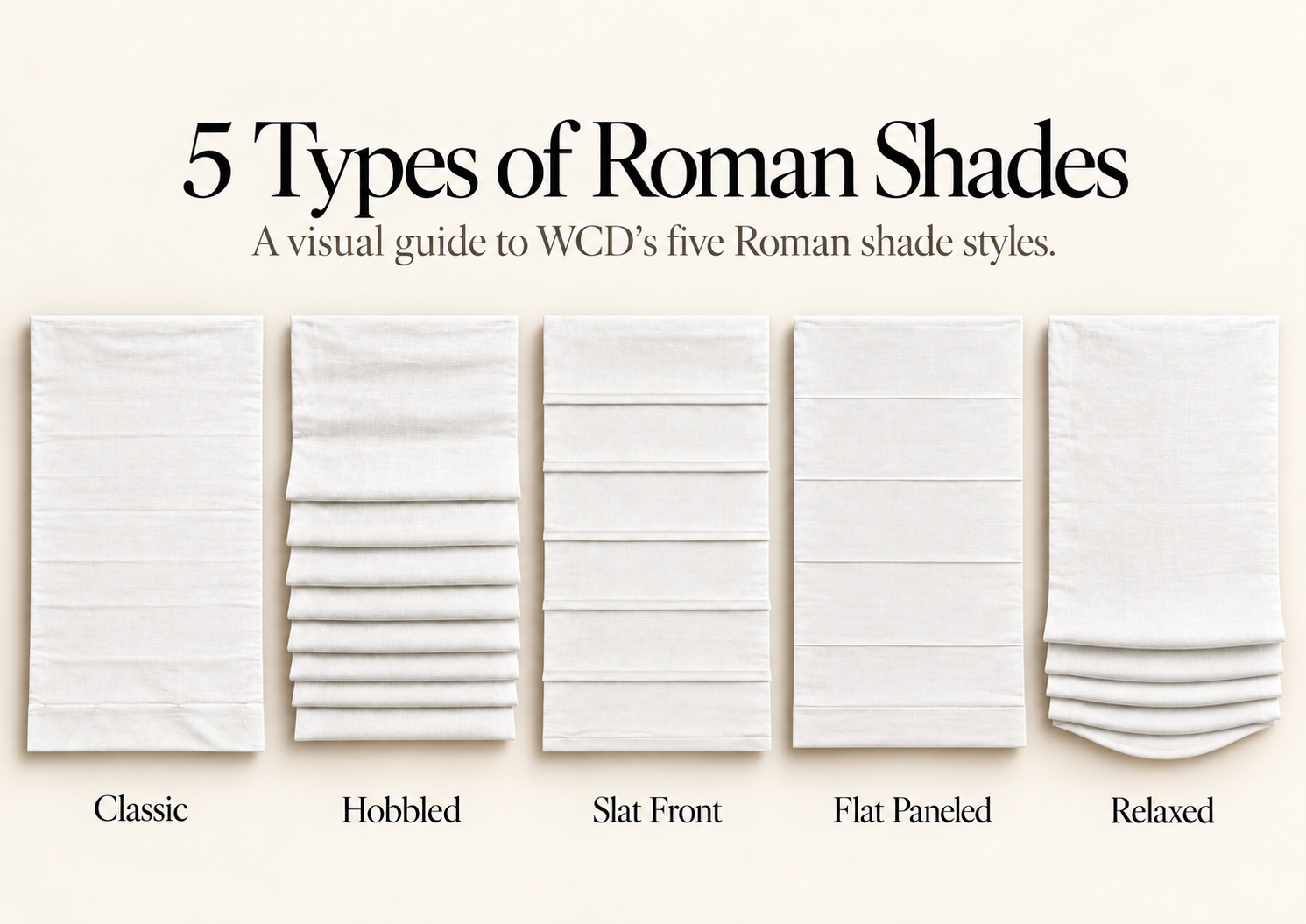
We fabricate five distinct Roman shade styles: Classic, Hobbled, Slat Front, Flat Paneled, and Relaxed.
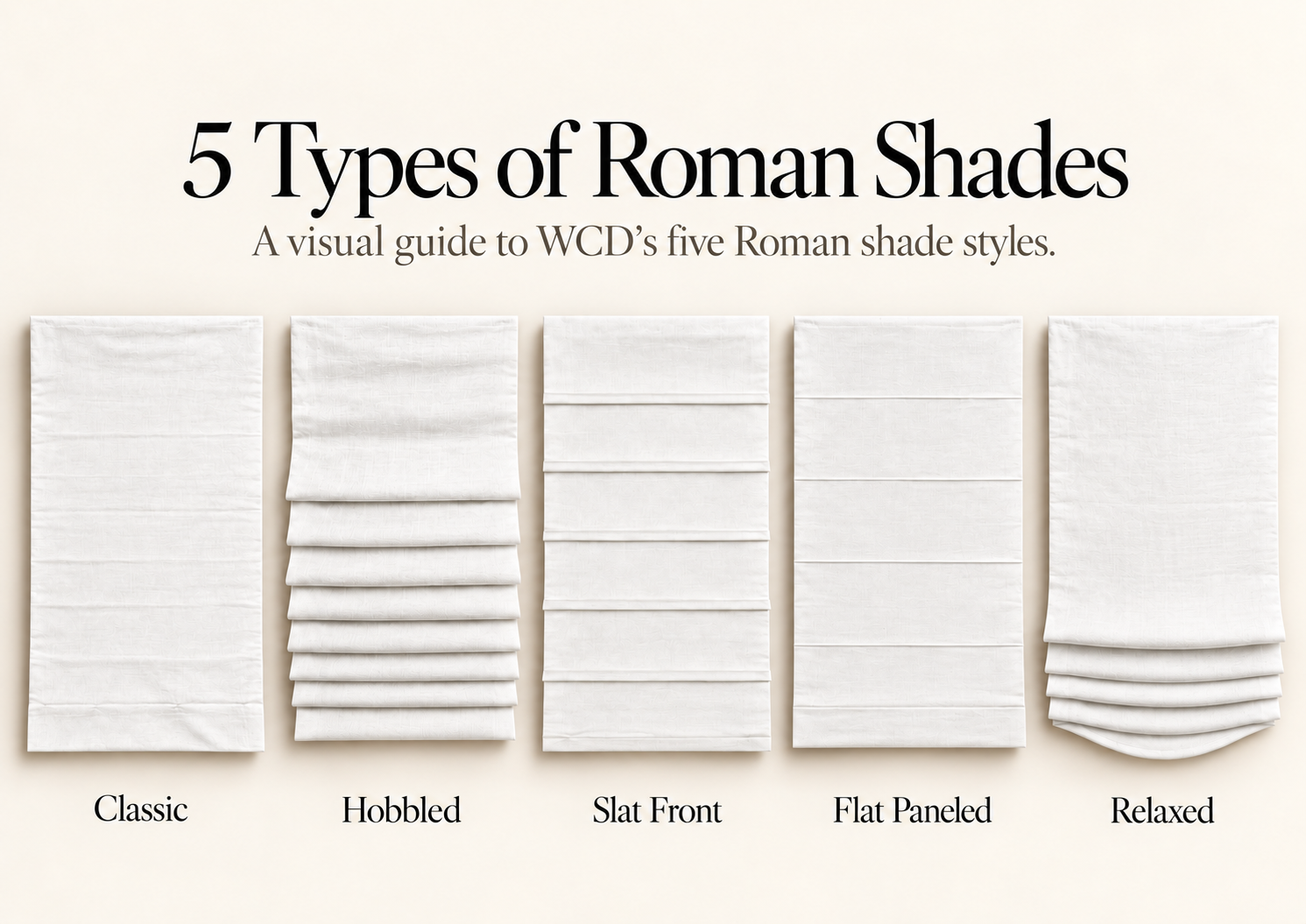
5 Types of Roman Shades | A Guide for Interior Designers — Explore the differences between Classic, Hobbled, Slat Front, Flat Paneled, and Relaxed Roman shades. Window Covering Distributors (WCD), based in Norcross, Georgia, specializes in custom Roman shade fabrication for interior designers and professional workrooms throughout Metro Atlanta and nationwide.
Here's what makes each style different and how to determine which one is right for your next project.
What Are the Five Types of Roman Shades?
While Roman shades can be fabricated in many variations, WCD offers five primary styles. Each has its own construction method, appearance, and advantages.
1. Classic Roman Shades: Timeless and Versatile
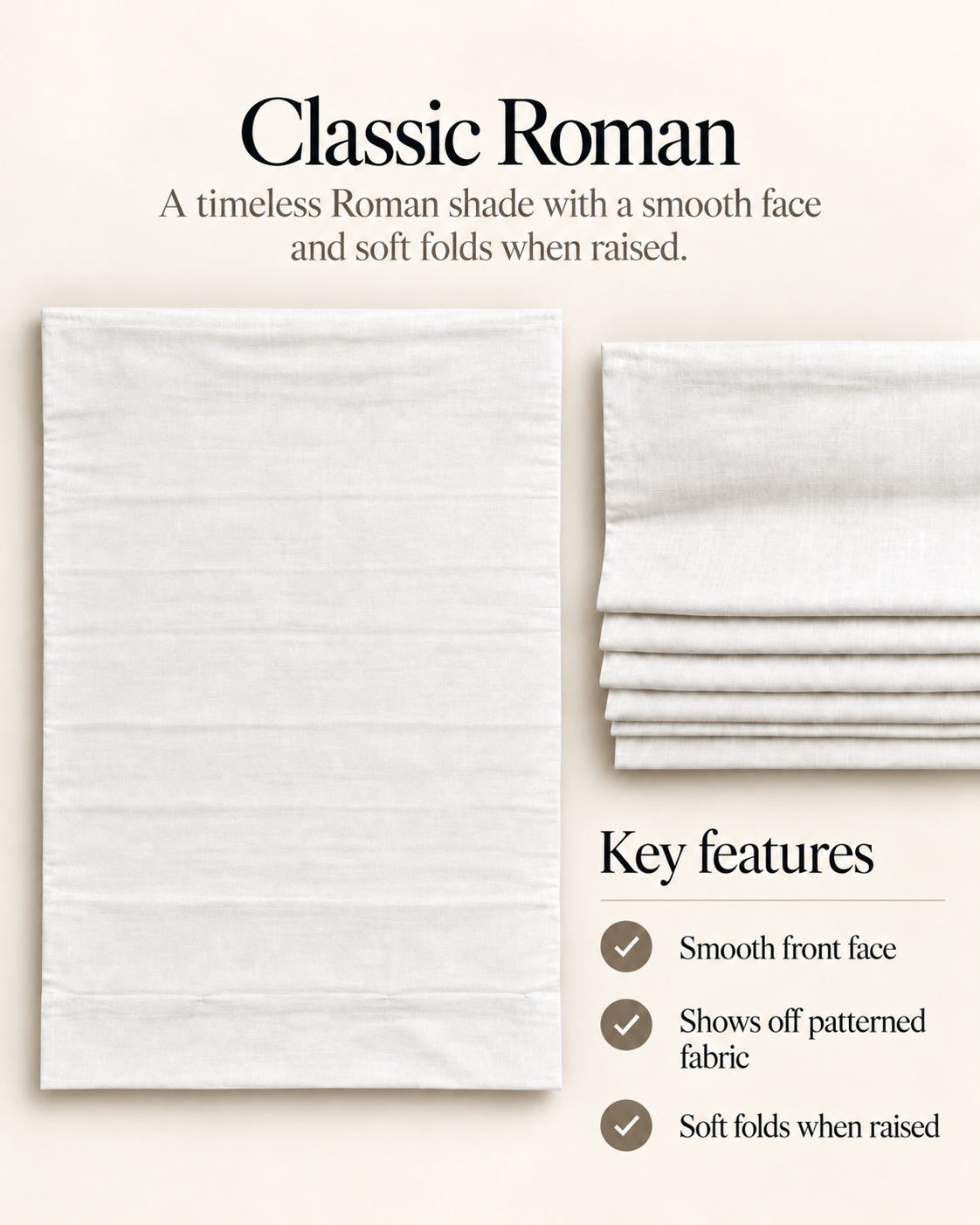
Classic Roman Shades | Custom Fabrication by WCD — Featuring a smooth, uninterrupted fabric face and soft folds when raised, Classic Roman shades are ideal for showcasing patterned fabrics. WCD provides custom Roman shade fabrication for interior designers and workrooms in Atlanta and nationwide.
The Classic Roman is one of the most versatile styles we fabricate.
This lined Roman shade features a smooth, uninterrupted fabric face without horizontal seams. When lowered, the shade allows the fabric to remain the focal point. When raised, it gathers into soft folds approximately six inches deep.
Why choose a Classic Roman?
The biggest advantage is its ability to showcase fabric. Because there are no horizontal seams across the front, large-scale patterns and decorative prints can be displayed without unnecessary interruptions.
This makes Classic Romans particularly popular for designers working with distinctive textiles.
The finished appearance is simple and tailored, making it suitable for traditional, transitional, and contemporary interiors.
Best for: Patterned fabrics, timeless interiors, and projects where the decorative fabric should take center stage.
2. Hobbled Roman Shades: Fullness and Dimension
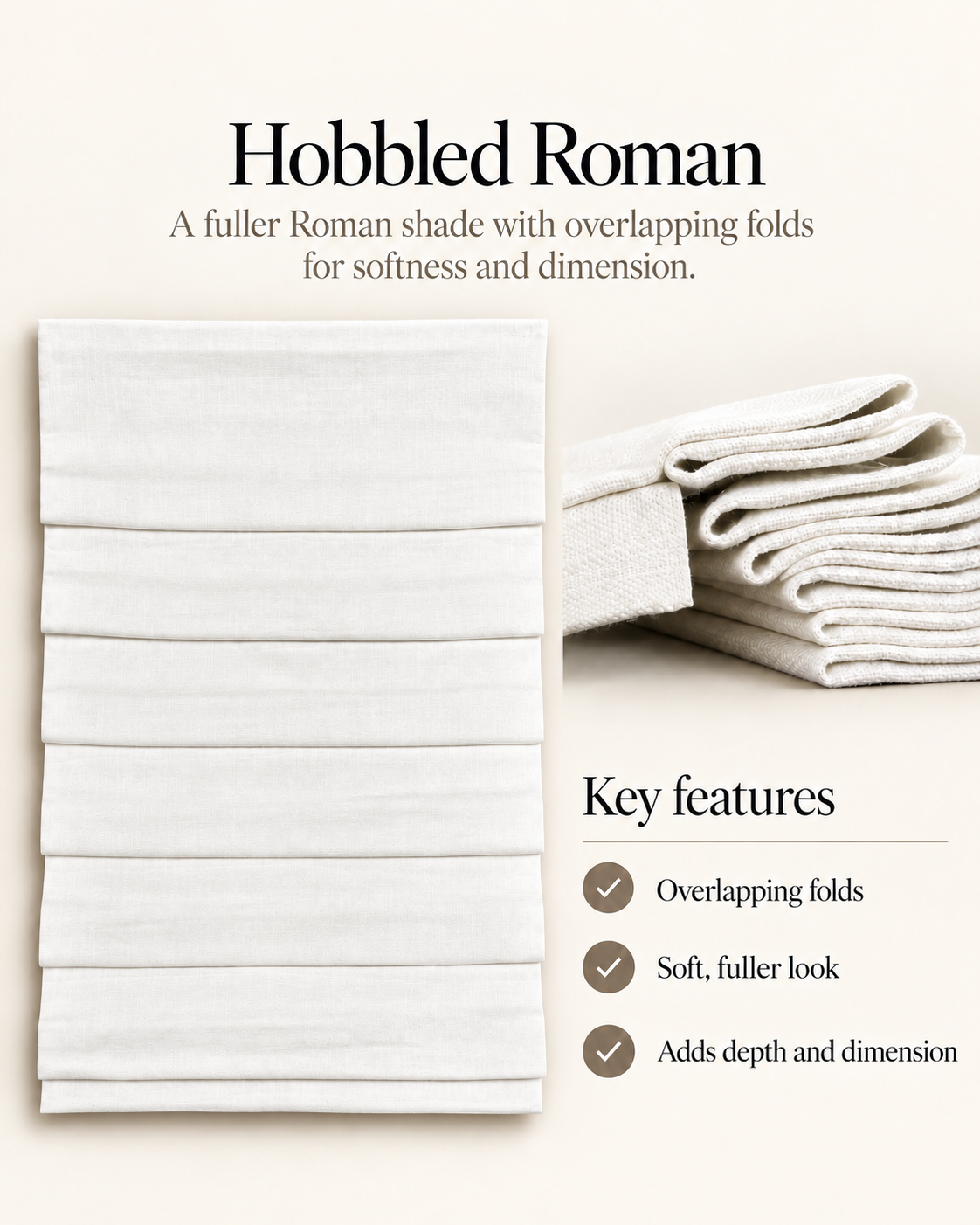
Hobbled Roman Shades | Custom Fabrication by WCD — With overlapping fabric folds that create fullness and dimension, Hobbled Romans offer a soft, decorative appearance for traditional and transitional interiors. Custom fabricated by WCD in Norcross, Georgia, for trade professionals nationwide.
Hobbled Roman shades create a fuller, more decorative appearance through a series of overlapping fabric folds.
Unlike a Classic Roman, which has a relatively flat face when lowered, a Hobbled Roman maintains its visible folds even in the lowered position.
This creates depth, texture, and a softer overall appearance.
Why choose a Hobbled Roman?
Hobbled Romans are particularly beautiful in traditional and transitional spaces where a designer wants a more decorative window treatment.
Because of the overlapping construction, this style requires more fabric than a flat Roman shade. The folds can also interrupt patterns, which is important to consider when selecting materials.
We typically recommend lining this style to help achieve the intended structure and finished appearance.
Best for: Traditional interiors, decorative windows, and designs that benefit from fullness and visible fabric folds.
3. Slat Front Roman Shades: Contemporary and Structured
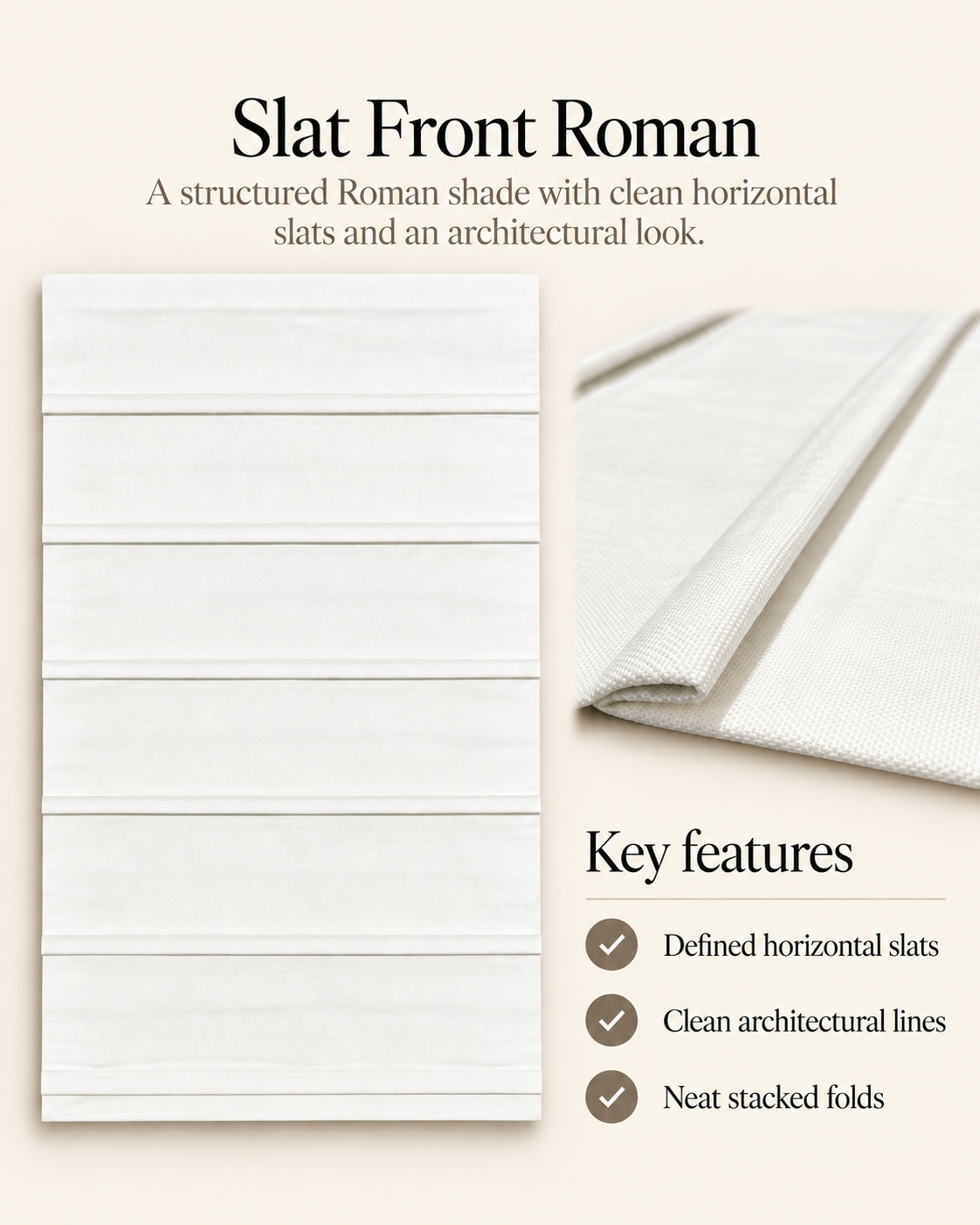
Slat Front Roman Shades | Custom Fabrication by WCD — Defined horizontal slats create a clean, architectural appearance, making this style an excellent choice for contemporary and tailored interiors. WCD provides custom Roman shade fabrication for designers and professional workrooms throughout Atlanta and nationwide.
The Slat Front Roman offers a more architectural appearance.
This style is constructed with slats sewn into the fabric, creating defined horizontal lines across the shade.
When lowered, the slats project slightly from the face. As the shade is raised, each slat tucks neatly beneath the fold above it.
The result is a structured, tailored window treatment with a contemporary feel.
Why choose a Slat Front Roman?
This style is ideal when a designer wants to incorporate the warmth and texture of fabric while maintaining clean, intentional lines.
The visible horizontal structure adds detail without the fullness of a Hobbled or Relaxed Roman.
Best for: Contemporary interiors, clean architectural details, and spaces where structured horizontal lines complement the design.
4. Flat Paneled Roman Shades: Crisp and Tailored
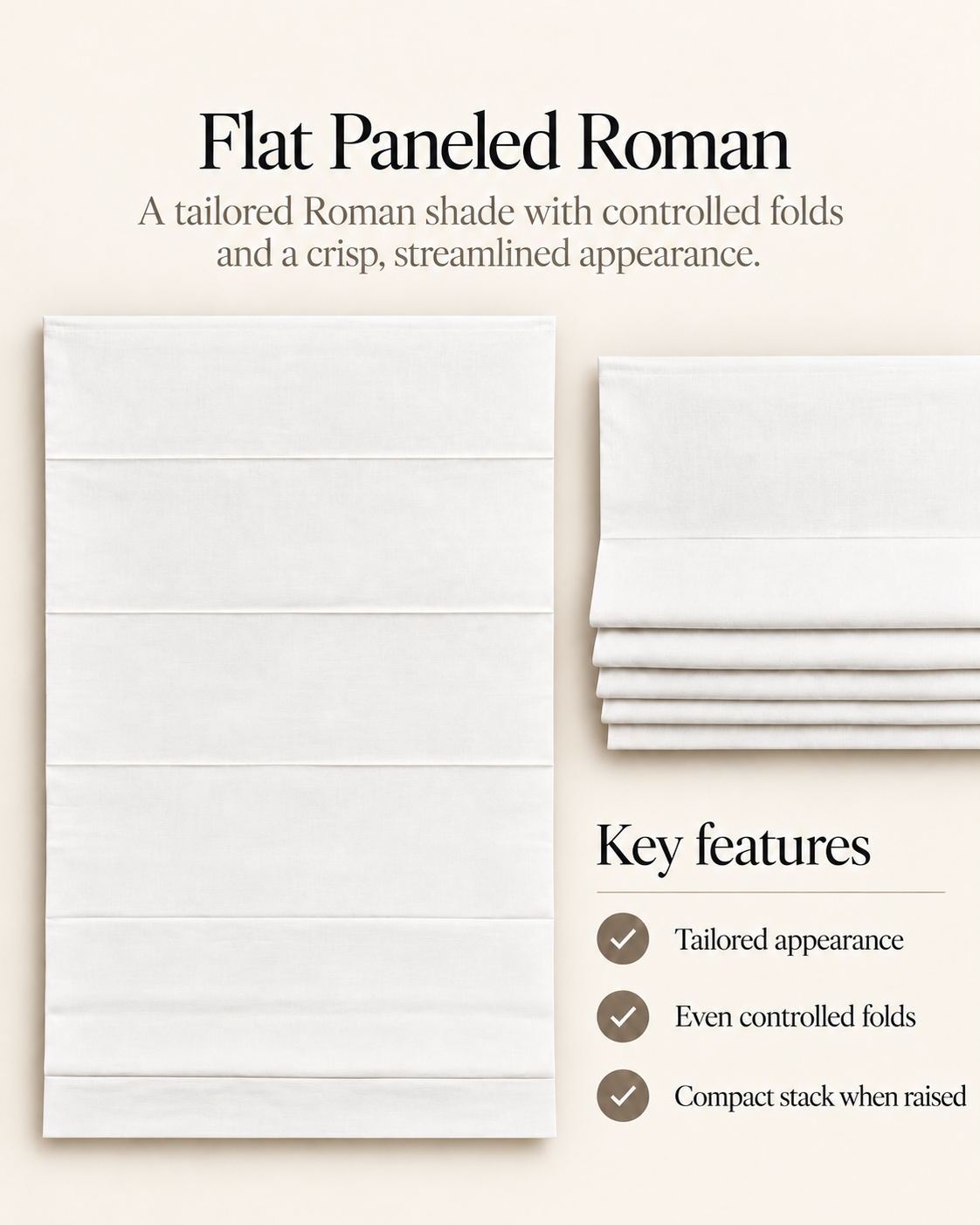
Flat Paneled Roman Shades | Custom Fabrication by WCD — Tailored construction and controlled horizontal folds create a crisp, streamlined window treatment with a compact stack when raised. WCD specializes in custom Roman shade fabrication for interior designers and workrooms in Georgia and across the country.
The Flat Paneled Roman is another excellent option for a clean, structured window treatment.
Unlike the Slat Front, this style uses small stays sewn into the back of the shade to create even, controlled folds.
These stays help the shade stack tightly when raised, producing a neat, tailored appearance.
Why choose a Flat Paneled Roman?
Flat Paneled Romans are well suited to projects where precise folds and a streamlined look are important.
Because the construction creates horizontal seam lines across the fabric face, material selection deserves special attention.
If you're working with a large-scale pattern or a fabric that requires specific pattern placement, we recommend discussing those details with our workroom before fabrication begins.
Best for: Tailored interiors, contemporary designs, and projects where consistent folds and a compact stack are priorities.
5. Relaxed Roman Shades: Soft and Elegant
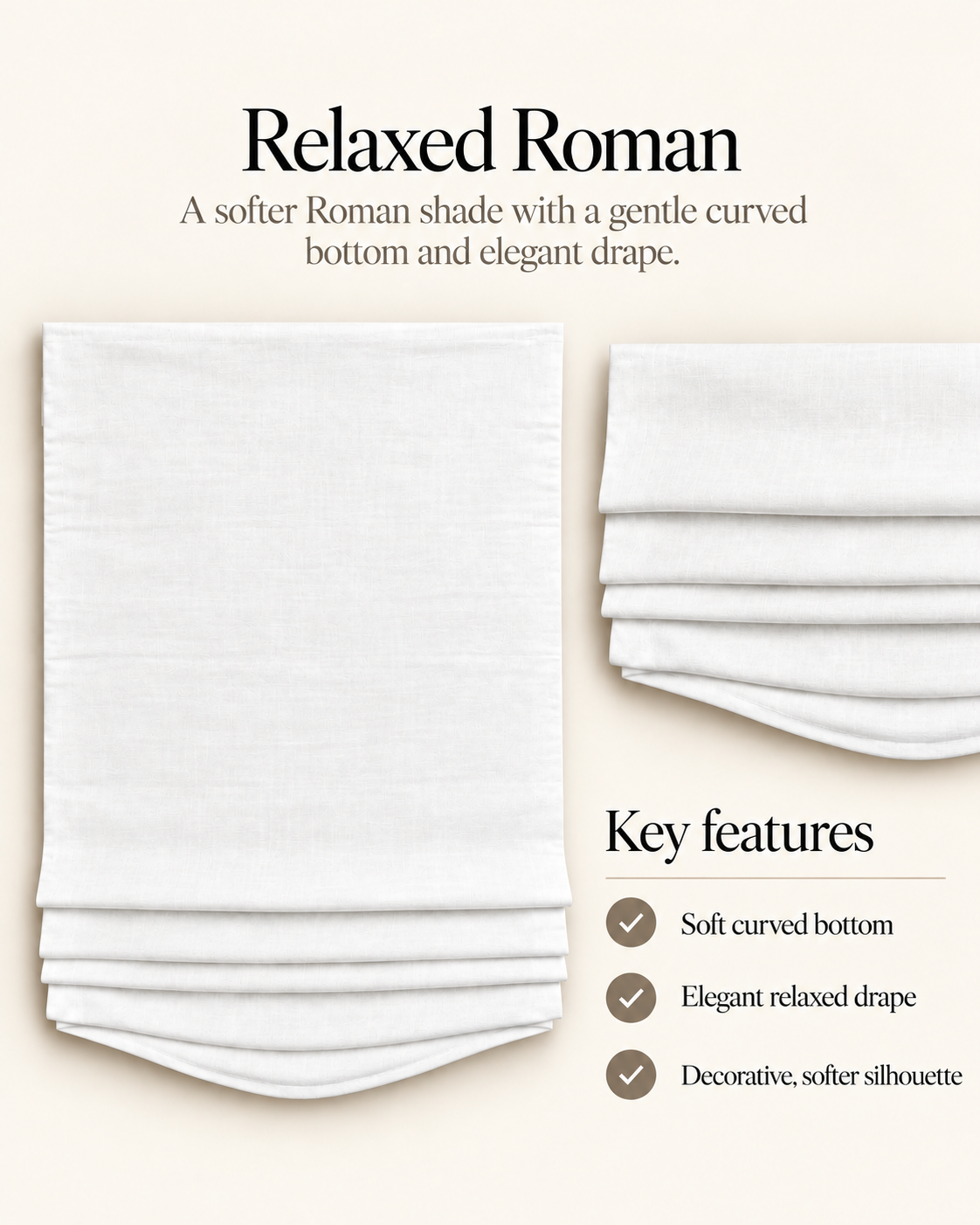
Relaxed Roman Shades | Custom Fabrication by WCD — A gently curved bottom and soft fabric folds give Relaxed Romans an elegant, less structured appearance. WCD fabricates custom Roman shades for interior designers and professional workrooms in Metro Atlanta and nationwide.
The Relaxed Roman has a softer, less structured appearance.
Rather than creating a straight, tailored bottom, the shade forms a gentle drape that adds softness to the window.
Narrower Relaxed Romans typically feature one swag, while wider shades can be fabricated with multiple swags.
Why choose a Relaxed Roman?
Relaxed Romans are an excellent choice when a designer wants a window treatment that feels decorative without being overly formal.
They work especially well in spaces where softness and movement are part of the overall design.
Fabric selection is particularly important because the weight and body of the material affect how the shade drapes.
Best for: Soft interiors, decorative applications, and spaces where a gentle, relaxed silhouette complements the room.
How to Choose the Right Roman Shade Style
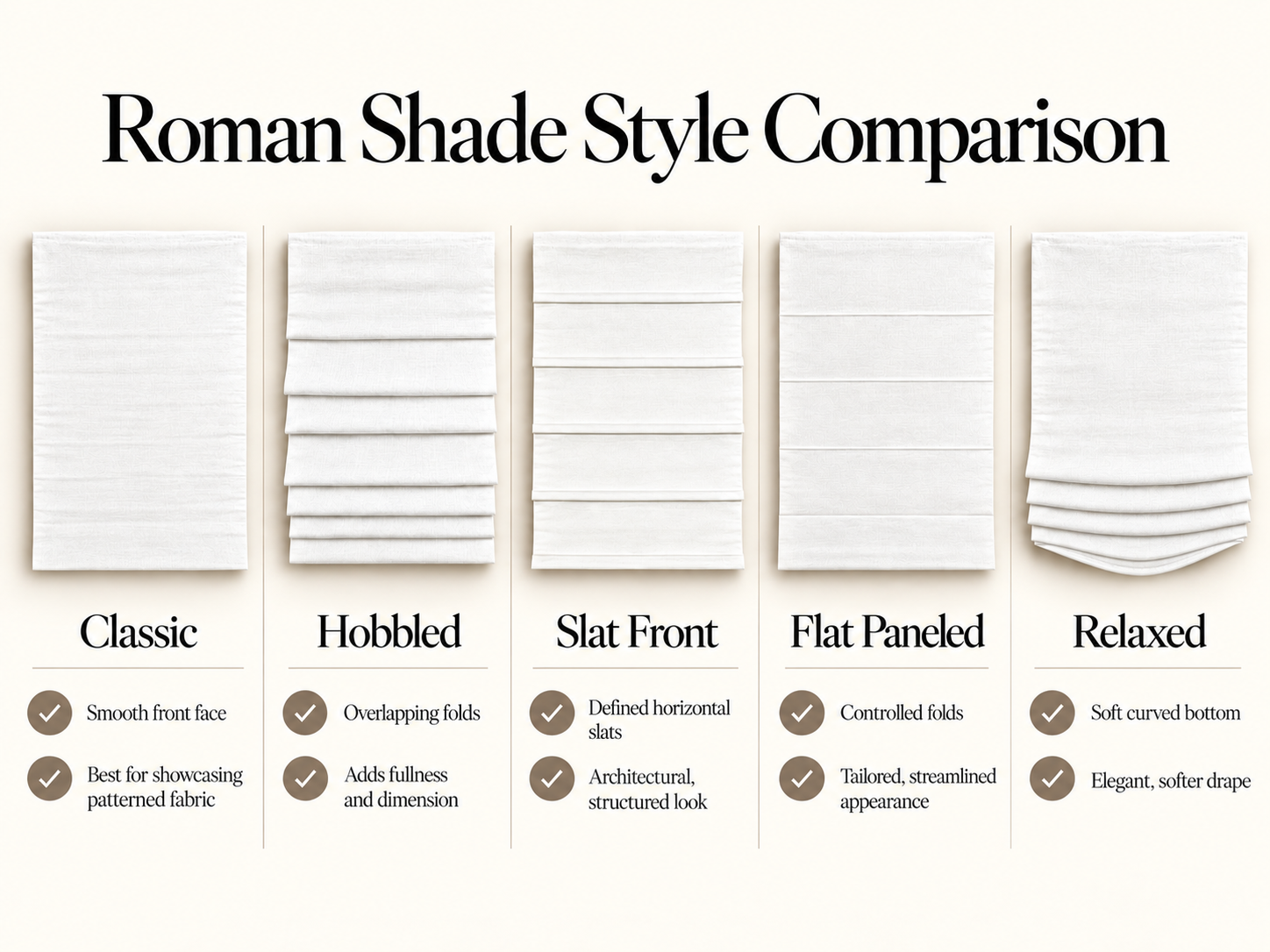
How to Choose the Right Roman Shade | WCD Designer's Guide — Choosing the right Roman shade starts with understanding the fabric, folds, and finished appearance. Explore WCD's five custom Roman shade styles, from the smooth Classic Roman to the softly draped Relaxed Roman. Based in Norcross, Georgia, WCD provides custom shade fabrication for interior designers and professional workrooms in Metro Atlanta and nationwide.
Choosing between Roman shade styles is about more than personal preference. The fabric, operating system, window dimensions, and intended appearance all play a role.
Here are a few considerations we recommend discussing before beginning a custom Roman shade project.
1. Start With the Fabric
Fabric selection often determines which Roman shade style will work best.
If you're using a large-scale print or detailed pattern, a Classic Roman may be an excellent choice because the fabric face remains uninterrupted.
If you prefer texture and fullness, a Hobbled Roman may be more appropriate.
Structured styles, such as Slat Front and Flat Paneled Romans, introduce horizontal lines that become part of the overall design.
The fabric's weight, body, and pattern should all be considered alongside the selected style.
2. Consider the Raised and Lowered Appearance
A Roman shade should look good in both positions.
Some styles create fuller, softer folds when raised, while others form a tighter, more compact stack.
This can affect how much of the window remains visible when the shade is open and how the treatment looks throughout the day.
3. Choose the Appropriate Operating System
The right operating system is just as important as the style itself.
At WCD, we fabricate Roman shades to accommodate a variety of lift systems, including clutch, cord lock, spring roller, motorized, and RBS systems.
Different systems can have different hardware, dimensional, and fabrication requirements.
For interior designers and workrooms, determining the operating system early helps ensure that the finished shade meets both the aesthetic and functional requirements of the project.
4. Don't Overlook Lining and Decorative Details
Lining can affect the appearance and light-control characteristics of a Roman shade.
WCD offers basic white and ivory linings, along with blackout lining options.
We also offer custom details such as decorative trims, valances, returns, and fabric-laminated crowns.
These details allow designers to customize the finished window treatment while maintaining the intended style.
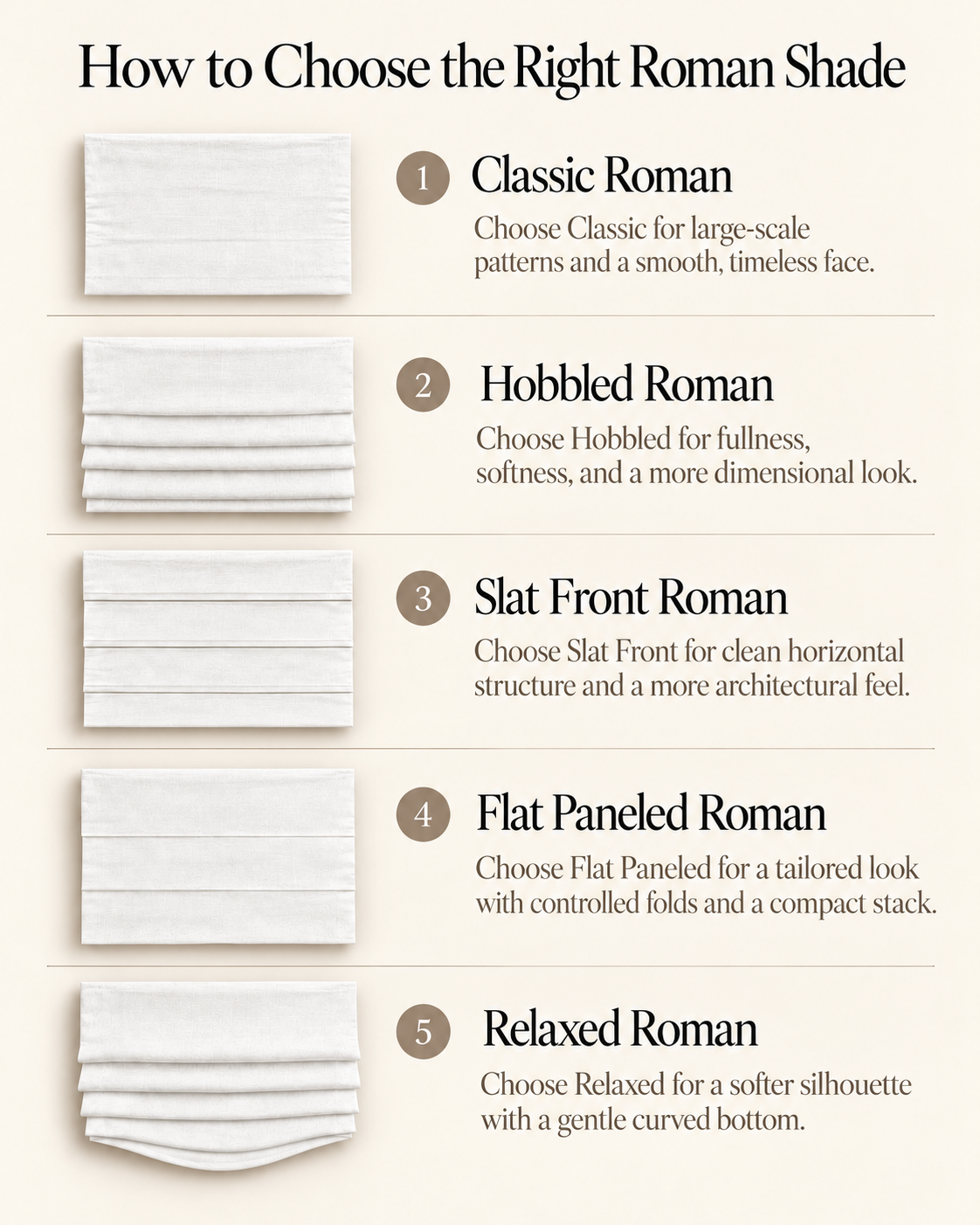
How to Choose the Right Roman Shade | WCD Designer's Guide — Choosing the right Roman shade starts with understanding the fabric, folds, and finished appearance. Explore WCD's five custom Roman shade styles, from the smooth Classic Roman to the softly draped Relaxed Roman. Based in Norcross, Georgia, WCD provides custom shade fabrication for interior designers and professional workrooms in Metro Atlanta and nationwide.
Looking for Another Custom Fabric Option?
In addition to Roman shades, WCD offers custom fabric laminated shades, giving designers another way to incorporate decorative fabrics into window treatments. Learn more about our custom fabric lamination capabilities in our related guide.
Have a project in mind?
Contact Window Covering Distributors to discuss your fabric, desired shade style, operating system, and custom fabrication requirements.
We'd be happy to help you explore the options.