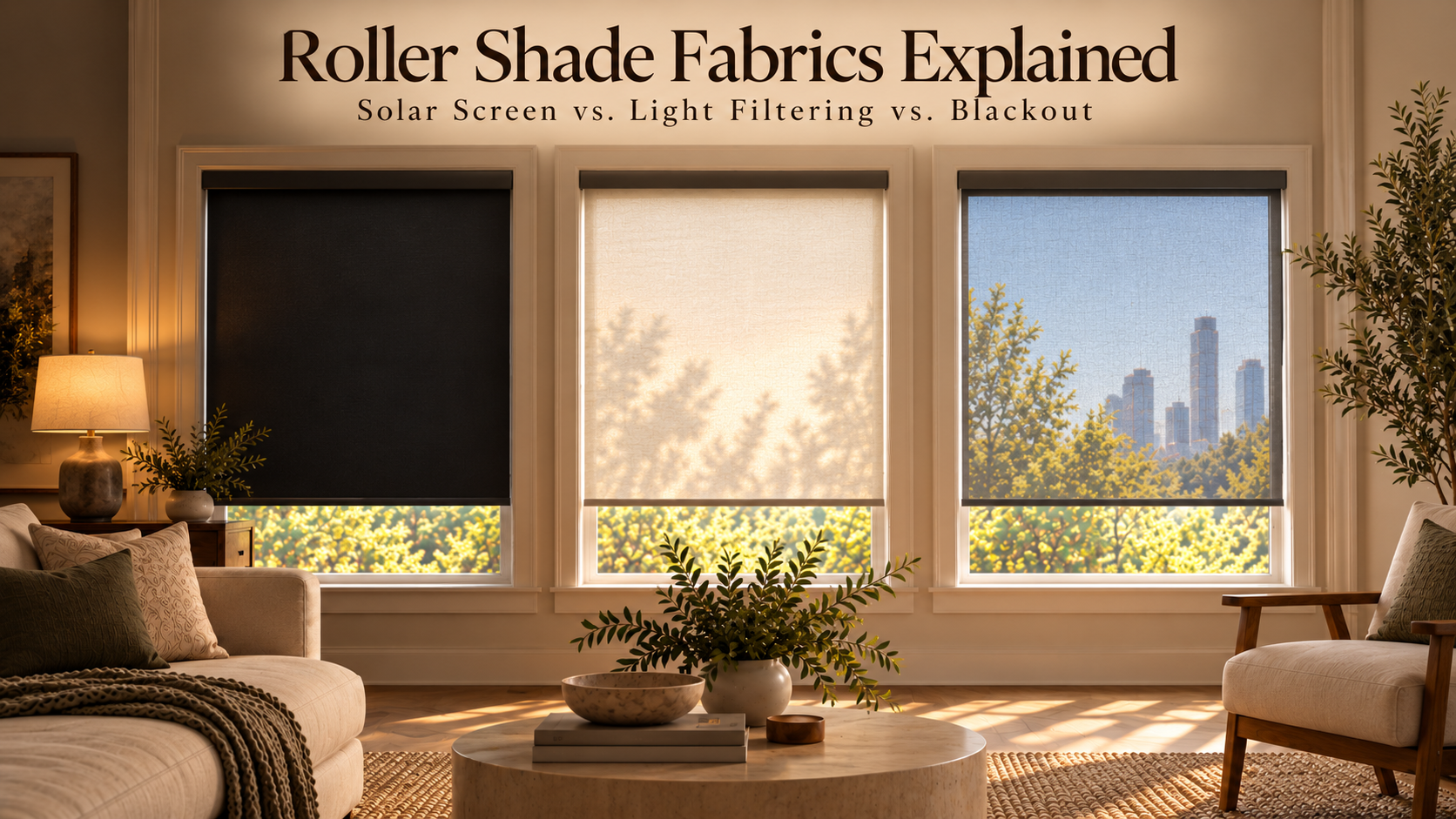
A seemingly simple roller shade can greatly influence how a space looks and feels every day. Much of that experience comes down to one thing: fabric.
The roller shade fabric you specify determines how bright a room feels in the afternoon, how much of an exterior view remains visible, what level of privacy the space has after dark, and how much solar heat reaches the interior.
For designers and workrooms, fabric selection should begin with function before color or texture. Consider what the room needs during the brightest part of the day and again after dark. For example, a living room with a beautiful view may need glare control without sacrificing visibility during the day, while a bedroom facing a busy street may need greater privacy and light control at night.
Most roller shade fabrics can be grouped into three main categories: solar screen, light filtering, and blackout. Terms such as open weave, basketweave, sheer, and room darkening further describe how certain fabrics look or perform.
The most important question is simple: How should the fabric manage light at this window?
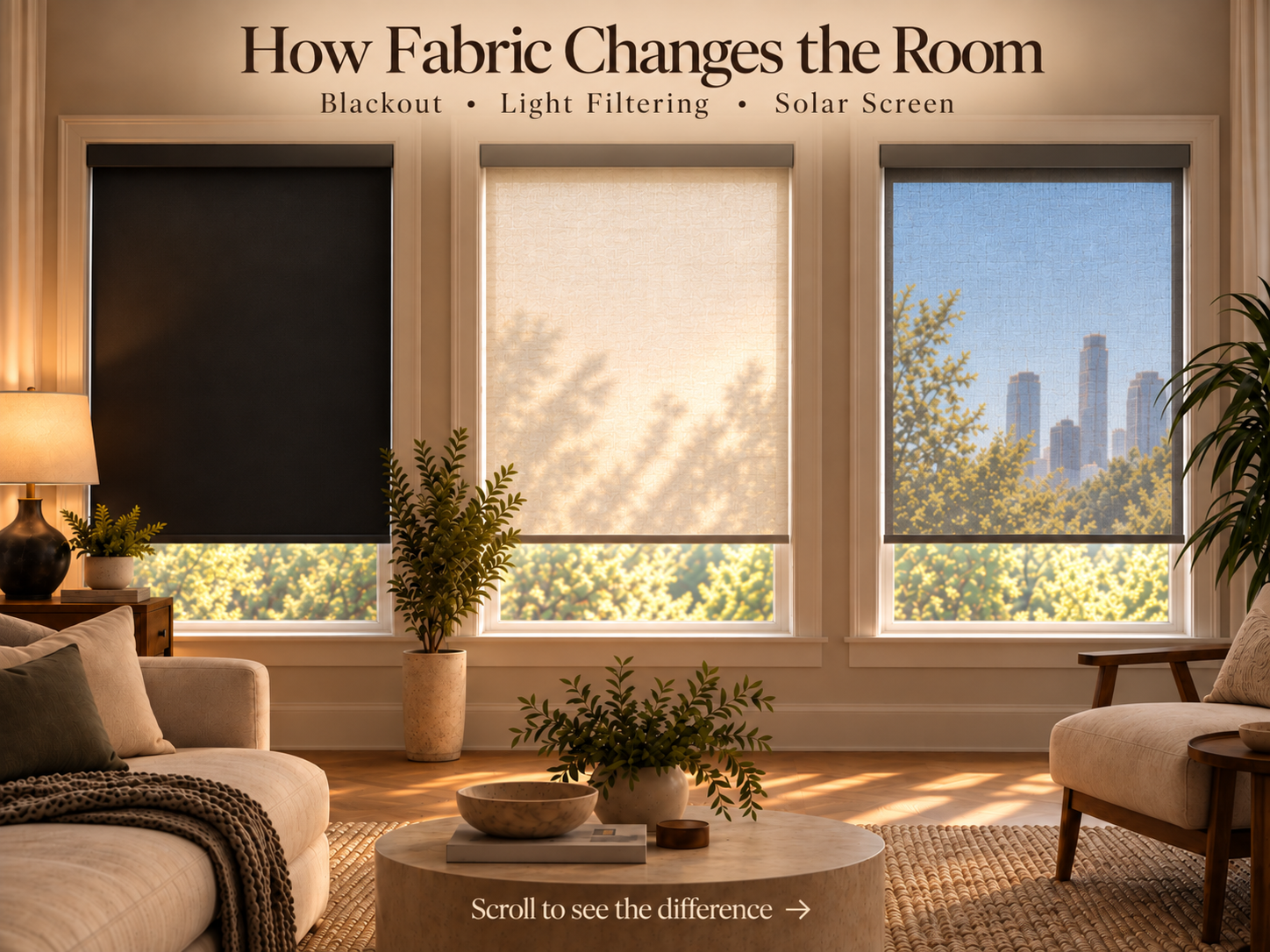
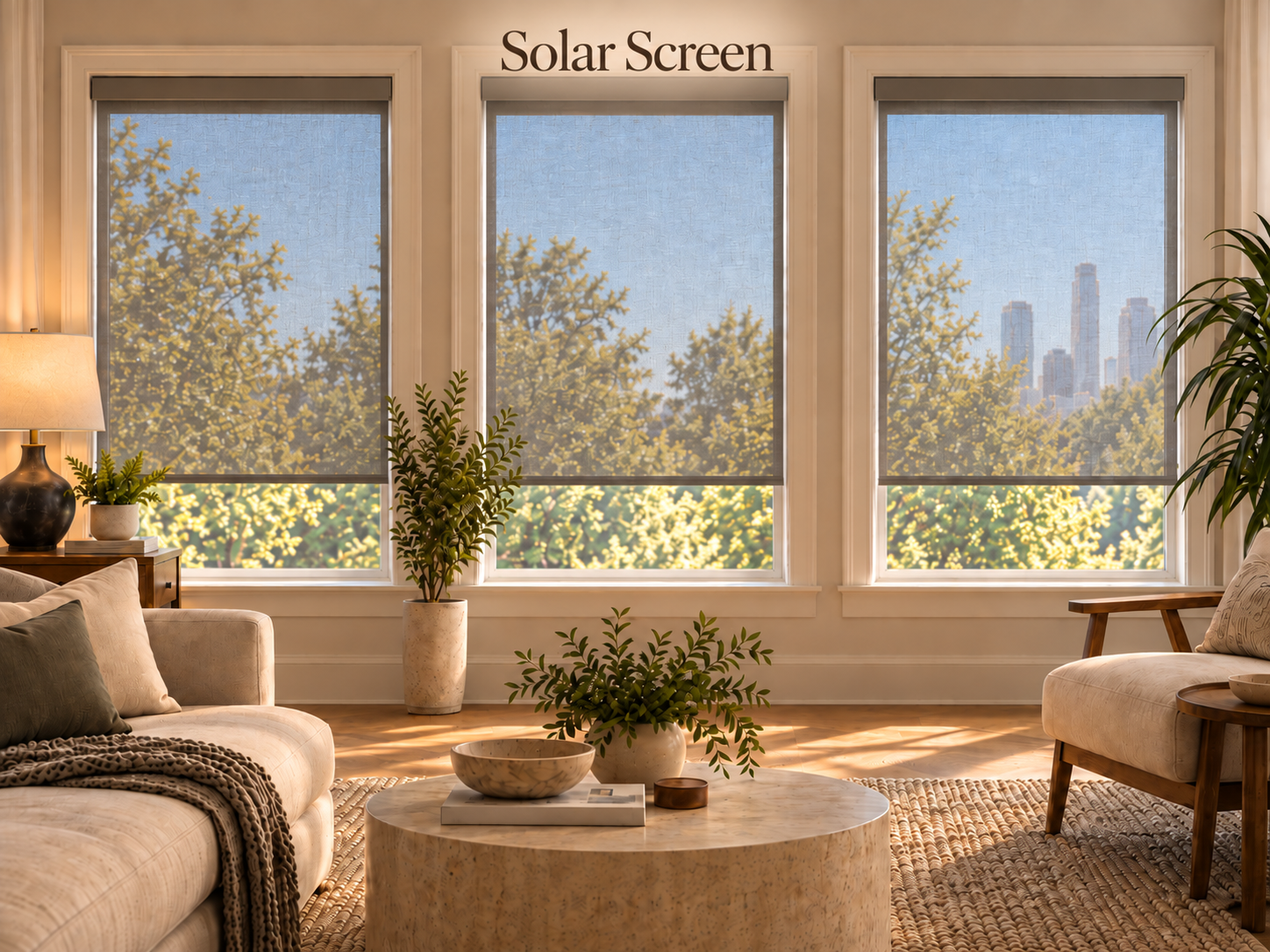
Solar Screen Fabrics: Control Glare Without Losing the View
Solar screen fabrics are a strong choice when the exterior view is part of the design.
Sometimes called open-weave or basketweave fabrics, solar screens are constructed with visible openings between the yarns. These openings allow daylight and outward visibility while helping reduce glare and solar heat.
They are especially useful for living spaces, offices, conference rooms, large expanses of glass, and other areas where completely closing off the view is not desirable.
What Does Openness Mean?
Solar screen fabrics are commonly specified by an openness factor, such as 1%, 3%, 5%, or 10%.
As a general rule:
1% openness: tighter weave with greater glare control and daytime privacy.
3% openness: strong solar control while maintaining some outward visibility.
5% openness: a balance of daylight, glare reduction, and view-through.
10% openness: the most open view and daylight of these common options, with less daytime privacy.
The number is only part of the decision. Fabric color, weave, window orientation, and actual daylight conditions all affect how the finished shade performs and looks.
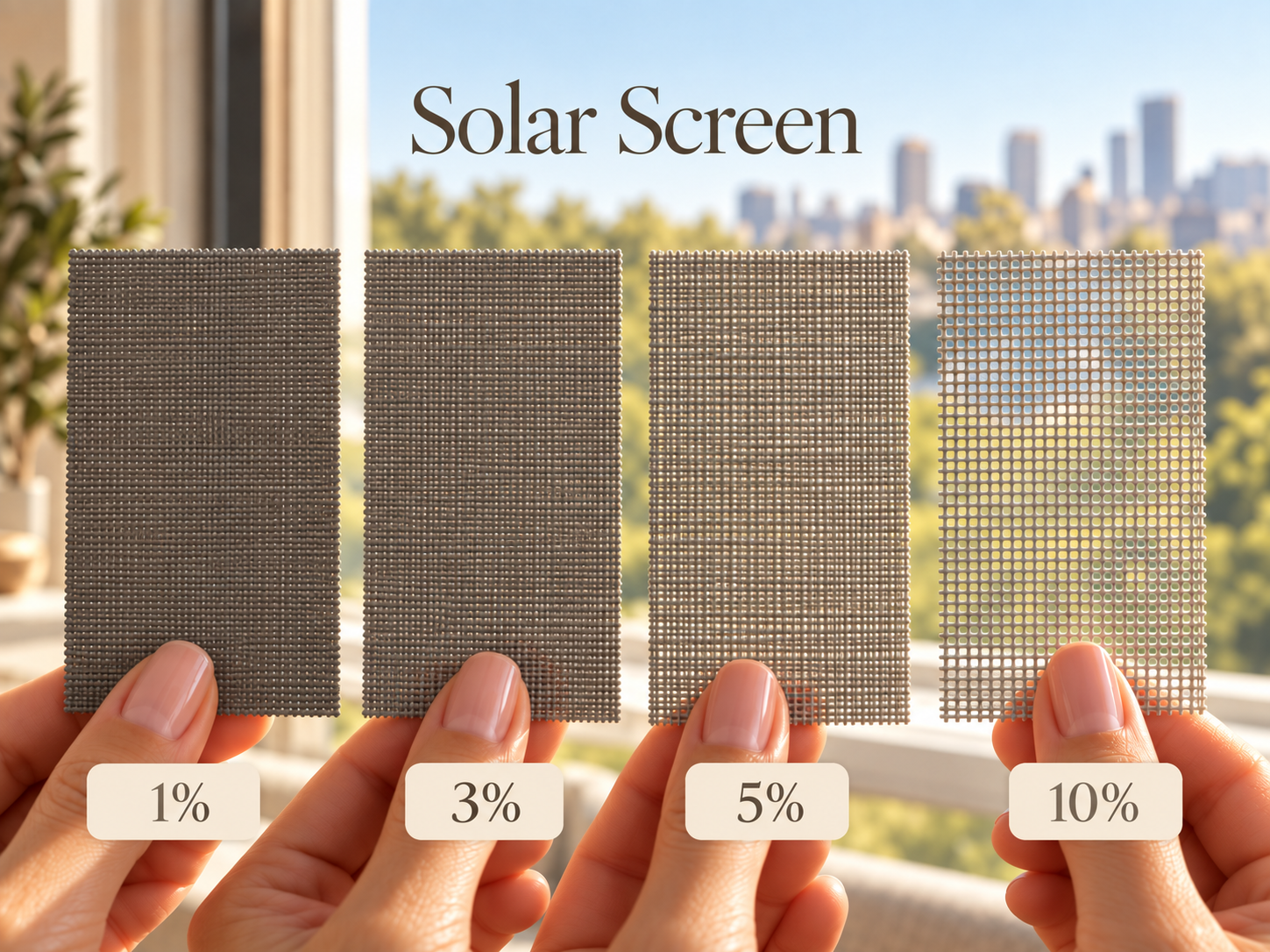
Solar screen openness affects glare control, daytime privacy, and outward visibility. Lower openness provides a tighter weave and more control, while higher openness preserves more daylight and view-through.
Remember: Solar Screen Privacy Changes at Night
Solar screens can provide useful daytime privacy, but they should not automatically be treated as a nighttime privacy solution.
During the day, exterior light is typically brighter than the room, making it harder to see inside. At night, interior lighting reverses those conditions. People and silhouettes may become visible through the shade.
When nighttime privacy is important, consider a more opaque fabric or a second layer of window treatment.
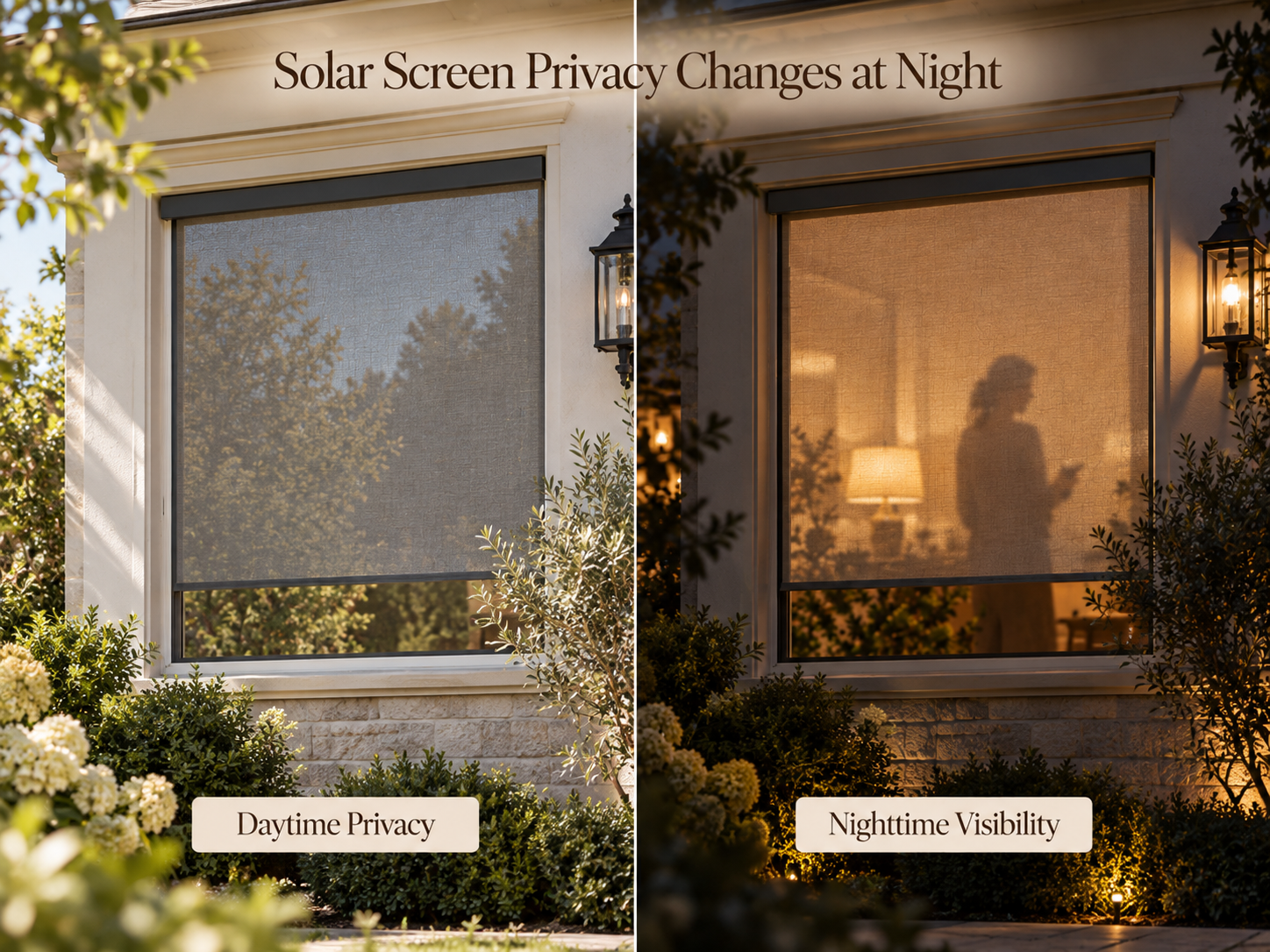
Solar screen privacy changes with lighting conditions. During the day, brighter exterior light helps provide privacy; after dark, interior lighting can make people and objects inside more visible through the shade.
Light-Filtering Fabrics: Soften the Light
Light-filtering roller shade fabrics sit between an open solar screen and a fully opaque blackout fabric.
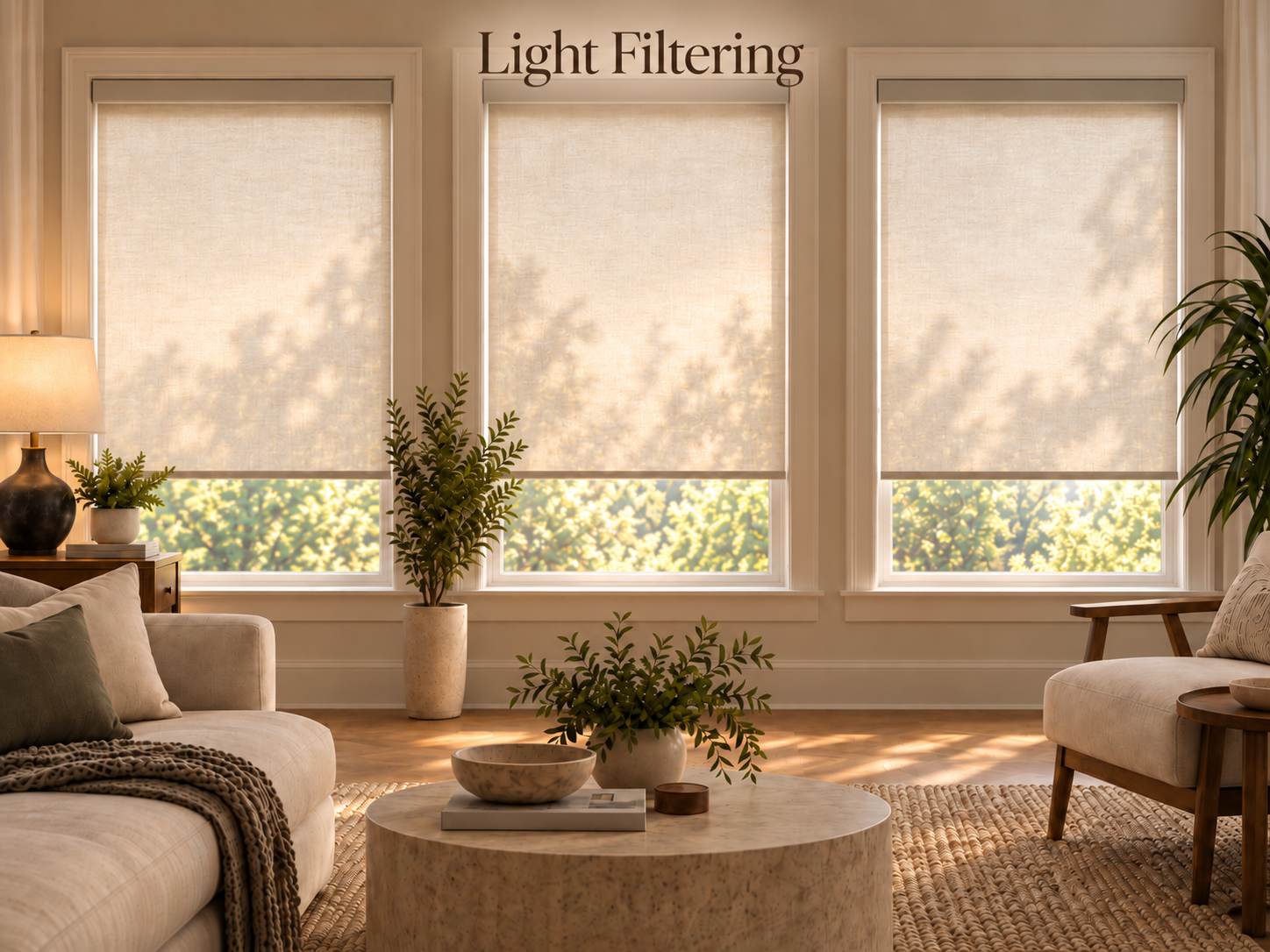
Rather than preserving a clear exterior view, they diffuse daylight, creating softer, more even light inside the room. They can be a good choice when the goal is to reduce glare and increase privacy without making the space feel dark.
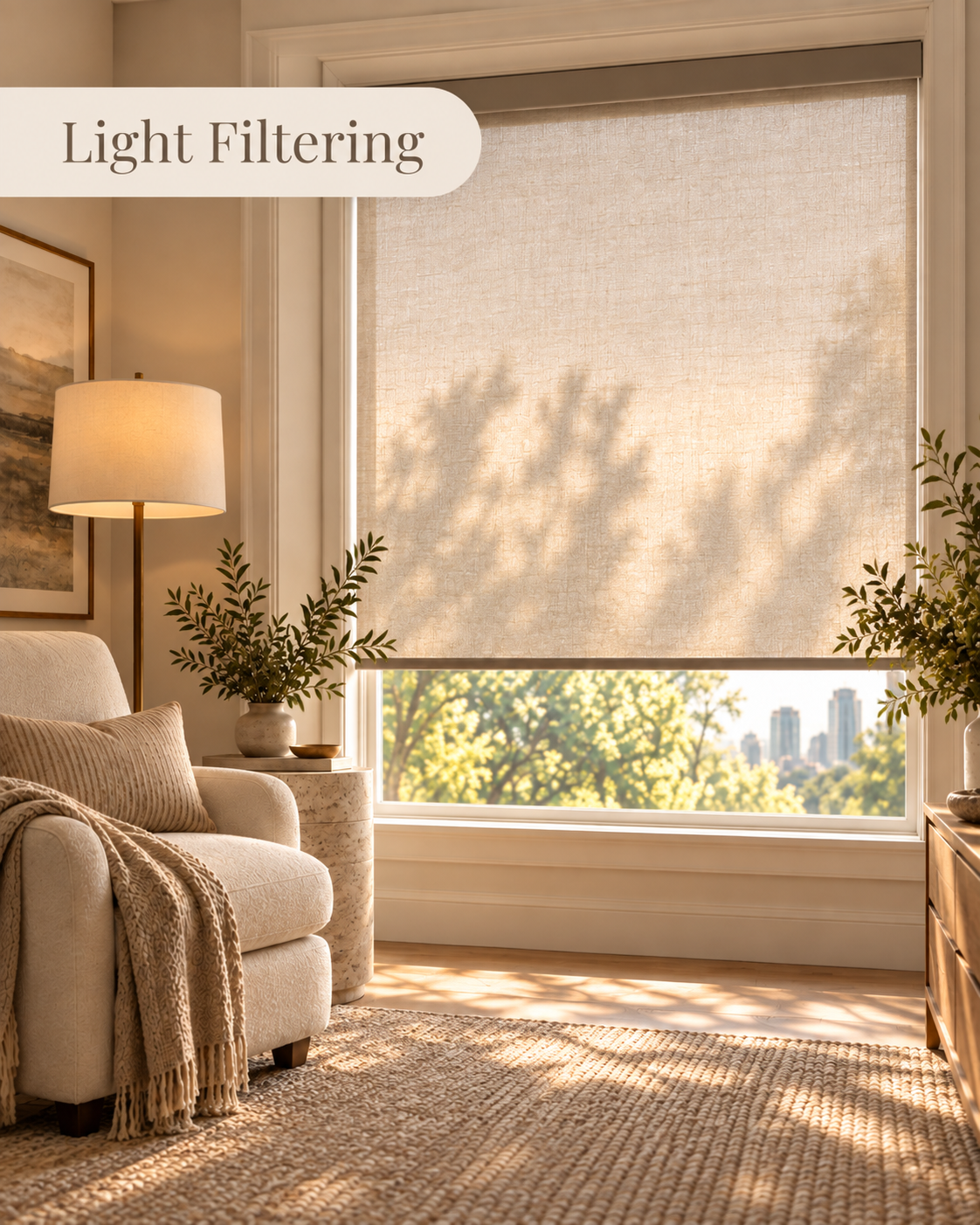
Light-filtering fabrics soften incoming daylight and reduce glare while keeping the room bright and comfortable.
Within this category you may see terms such as sheer, translucent, light filtering, and room darkening.
A sheer fabric may allow significant natural light, while a denser light-filtering fabric provides more privacy and light control. As the fabric becomes more opaque, it may fall into the room-darkening range.
Room darkening is not necessarily blackout. It significantly reduces incoming light but may still allow some light through the fabric or around the edges of the finished shade.
That distinction is important when setting expectations with a client.
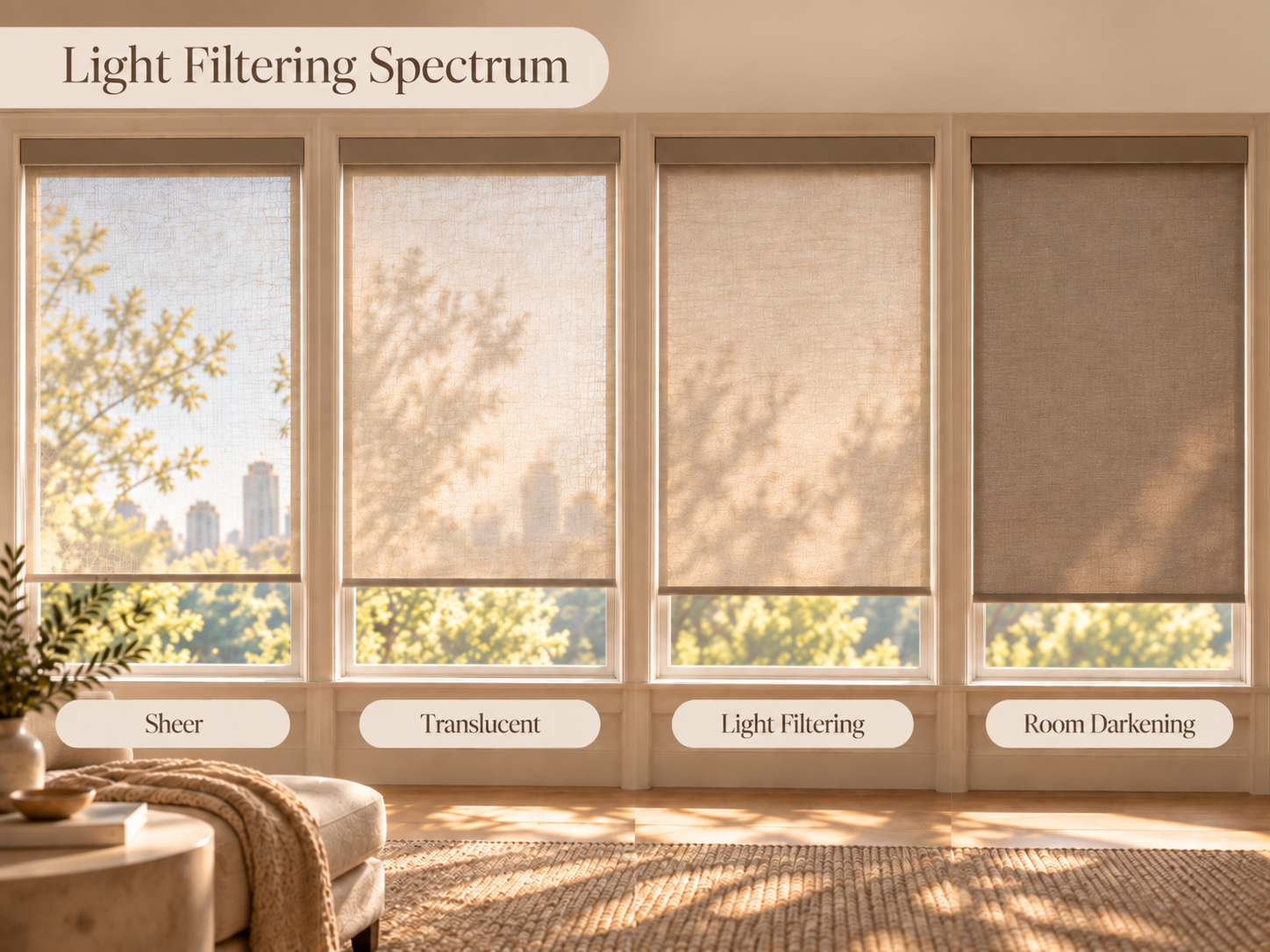
Light-filtering fabrics can vary significantly in opacity. From sheer to room darkening, each option offers a different balance of daylight, privacy, and light control.
Designer and Decorative Fabrics
For projects where the textile itself is part of the design, WCD can also fabricate fabric-laminated roller shades using decorative material supplied for the project.
Depending on the desired performance, decorative fabric can be paired with an appropriate backing, allowing the designer to achieve a more customized look while retaining the function of a roller shade.
This is especially useful when a standard roller shade collection does not provide the color, pattern, or texture the project requires.
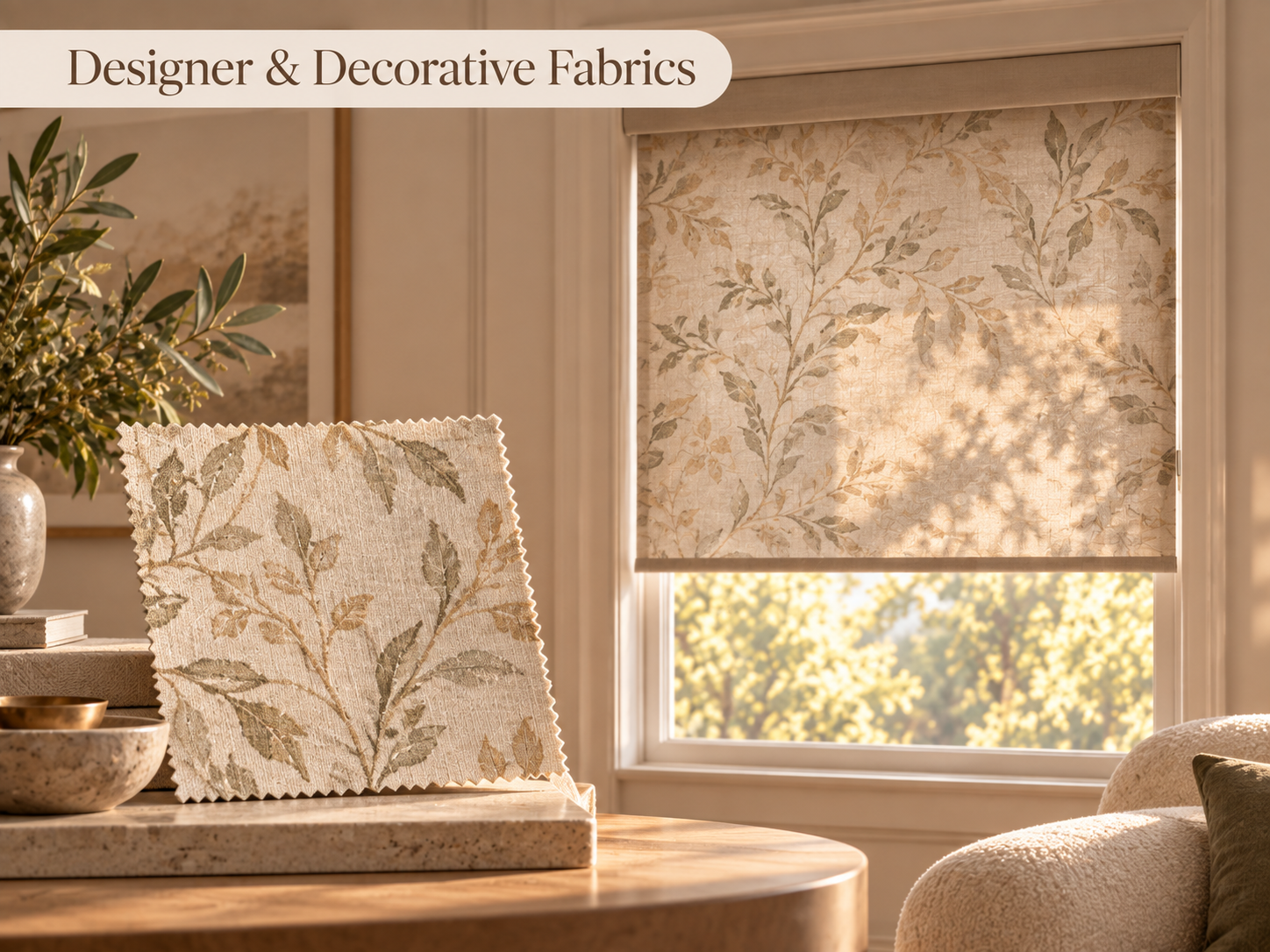
Fabric-laminated roller shades allow designers to carry a decorative textile into the window treatment while maintaining the clean function of a roller shade.

Blackout Fabrics: When Darkness and Privacy Matter
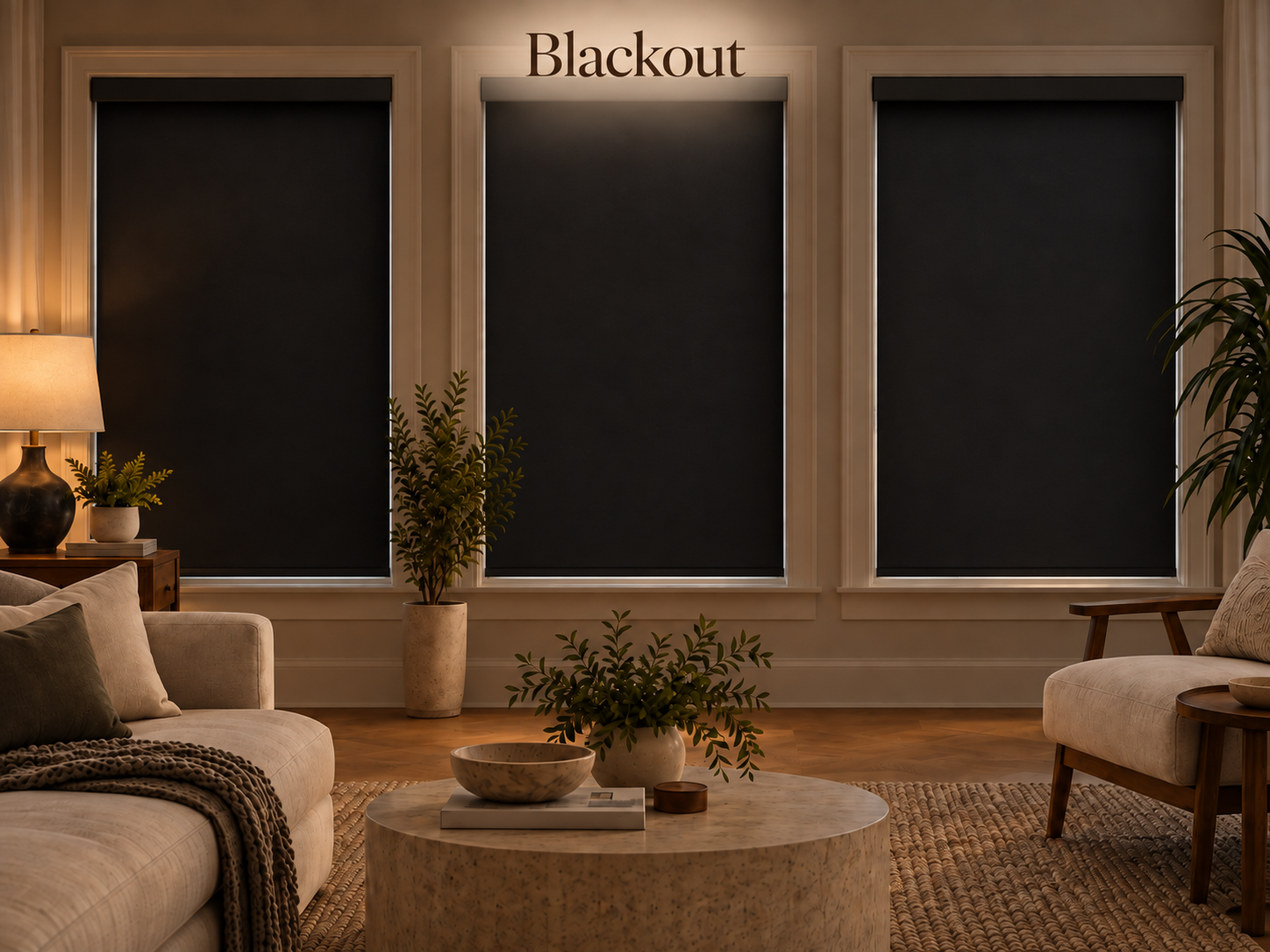
Blackout roller shade fabrics are designed to prevent light from passing through the material itself.
They are commonly considered for bedrooms, nurseries, media rooms, hospitality projects, and other spaces where darkness and privacy are priorities.
But there is one important distinction:
Blackout fabric does not automatically mean a completely blacked-out room.
Even an opaque fabric can allow light around the sides, above the roller, or below the bottom of the shade. This can be especially noticeable with an inside-mounted roller shade because the shade requires clearance to operate properly.
For projects where maximum darkness is required, the entire shade system should be considered. Depending on the application, options may include outside mounting, side channels, fascia or cassette systems, and other light-management details.
Fabric selection matters, but fit and fabrication matter just as much.
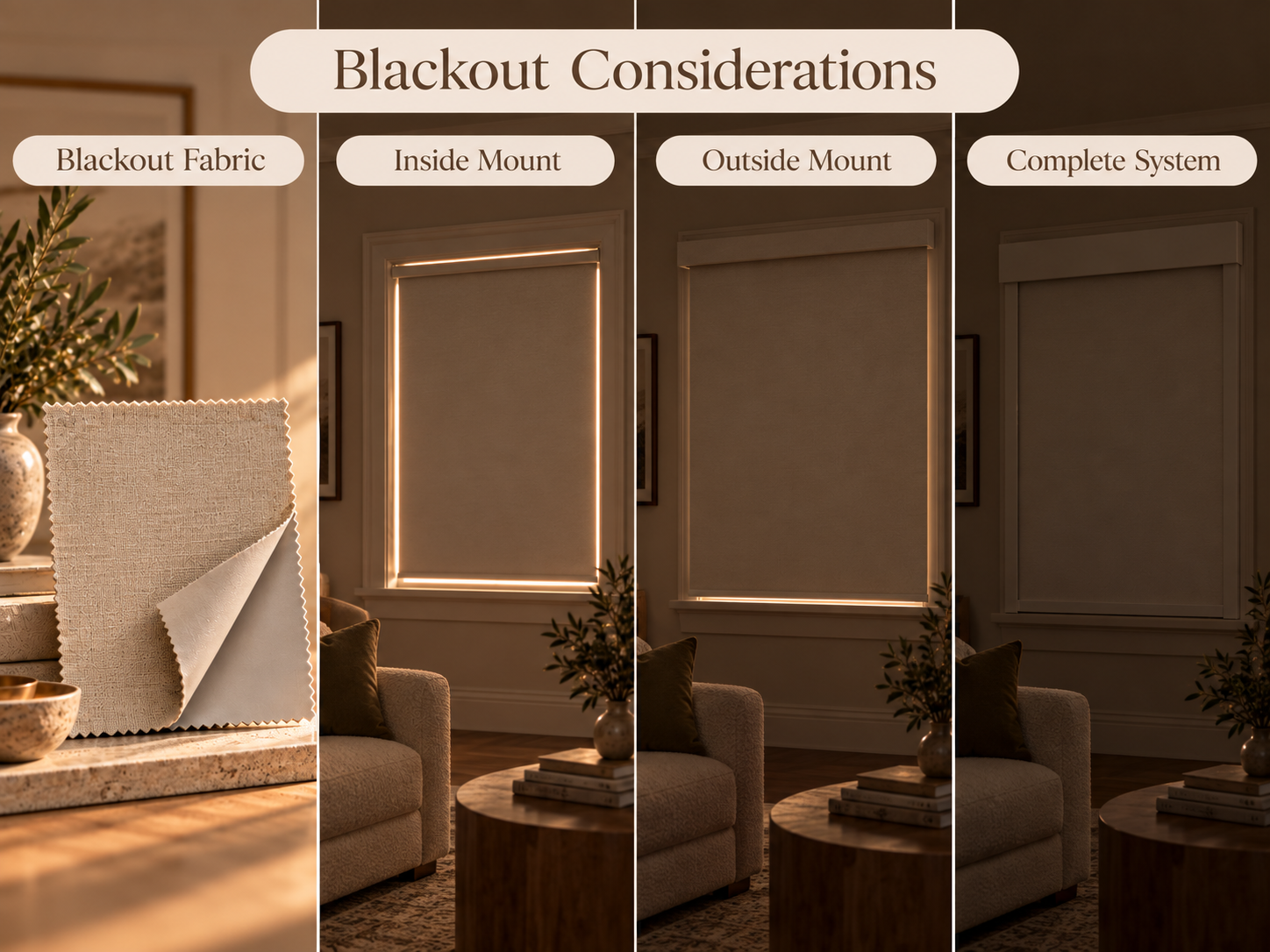
Blackout performance depends on more than the fabric alone. Mounting style, edge gaps, and added components such as fascia or side channels can all affect how much light enters the room.
Which Roller Shade Fabric Should You Specify?
Start with the needs of the space.
Choose solar screen when preserving the view and controlling glare are priorities.
Choose light filtering when you want to soften daylight and increase privacy without completely darkening the room.
Choose blackout when maximum light control and privacy are most important.
Before making the final selection, ask:
Does the client want to preserve the exterior view?
How much direct sun does the window receive?
Is glare a concern?
Is daytime privacy enough, or is nighttime privacy required?
Does the room need to become very dark?
How will the shade be mounted?
Once those functional questions are answered, choosing color, texture, and finish becomes much easier.
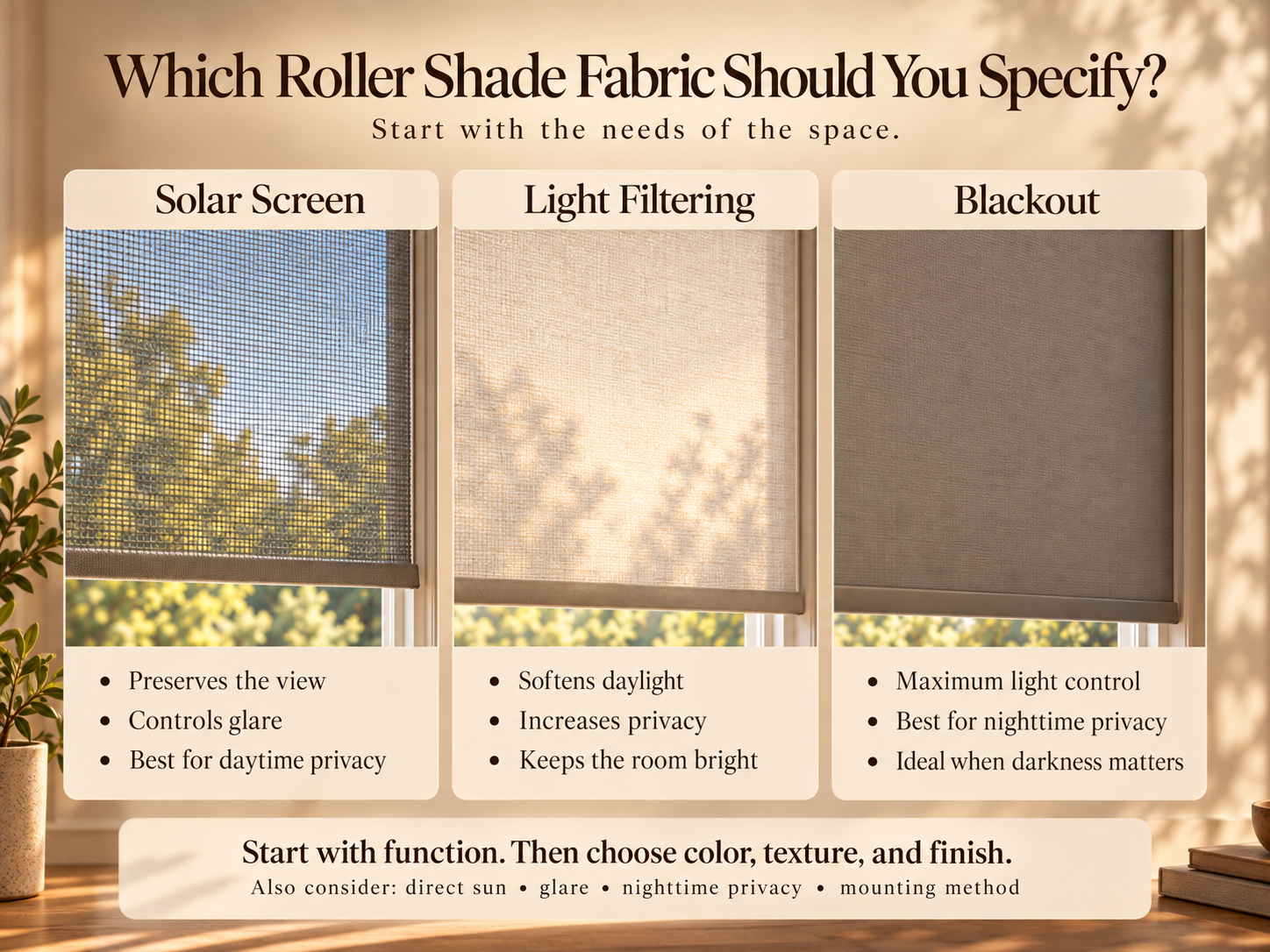
Start with the function of the space. Solar screen fabrics preserve views and reduce glare, light-filtering fabrics soften daylight and add privacy, and blackout fabrics provide the greatest light control and nighttime privacy.
Always Look at the Fabric at the Window
A photograph or computer screen cannot fully show how a roller shade fabric will behave in the finished space.
Whenever possible, evaluate a physical sample against the actual window. Look at the fabric with the room's paint colors, furnishings, and other textiles, but also pay attention to the light transmission, view-through, privacy, and texture.
For solar screen fabrics in particular, it is useful to view the sample during daylight and again after dark with the interior lights on.
This is especially valuable throughout Georgia and the Southeast, where strong sun exposure, warm interiors, and neighboring properties often play a major role in fabric selection.
Need Help Choosing the Right Roller Shade Fabric?
Window Covering Distributors works with designers, decorators, workrooms, contractors, and other trade professionals to manufacture custom roller shades for projects throughout the Southeast and beyond.
WCD can help compare solar screen, light-filtering, and blackout options and provide physical samples of available fabrics so you can evaluate them against the actual project conditions.
Contact WCD to discuss your project or request roller shade fabric samples before making your final selection.